4.3 — Soil, heritage, memory and human connection
Soil, heritage and belonging
Page 1 / 4
Soil in place and heritage
People are more likely to care about soil when they can relate to it. Soil is not only a natural resource or the upper layer of the Earth. It can also form part of a community’s heritage and local identity. In some places, this connection remains clearly visible, because local soil becomes part of the materials people shape, the surfaces and buildings around them, and the practices they pass on across generations. In this sense, soil heritage is not only about what soil contains or supports. It is also about how soil gives a place its character and helps people recognise what is distinctive about the area in which they live.
This connection was often easier to see in the past than it is today. Local soils were not abstract or distant; they formed part of everyday life. Clay-rich soils were shaped into vessels and cooking pots, while earth was used to make floors, renders and walls. UNESCO describes earthen architecture as one of the strongest expressions of building with readily available local resources, with clear examples such as Taos Pueblo in the south-west of the United States and Bam in south-eastern Iran. At Lascaux in France, cave walls display images created using earth-based pigments, with red tones linked to haematite and yellow tones linked to goethite. Among the Karo people of southern Ethiopia, face and body painting demonstrates how earth-based colours can become forms of adornment, creativity, social interaction, and cultural expression. Today, however, these practices also contribute to the area’s tourist appeal, which means that encounters with photographers, visitors, and tourism can influence how body painting is presented. Contemporary images may therefore bring together long-standing cultural practices and newer forms of public display.
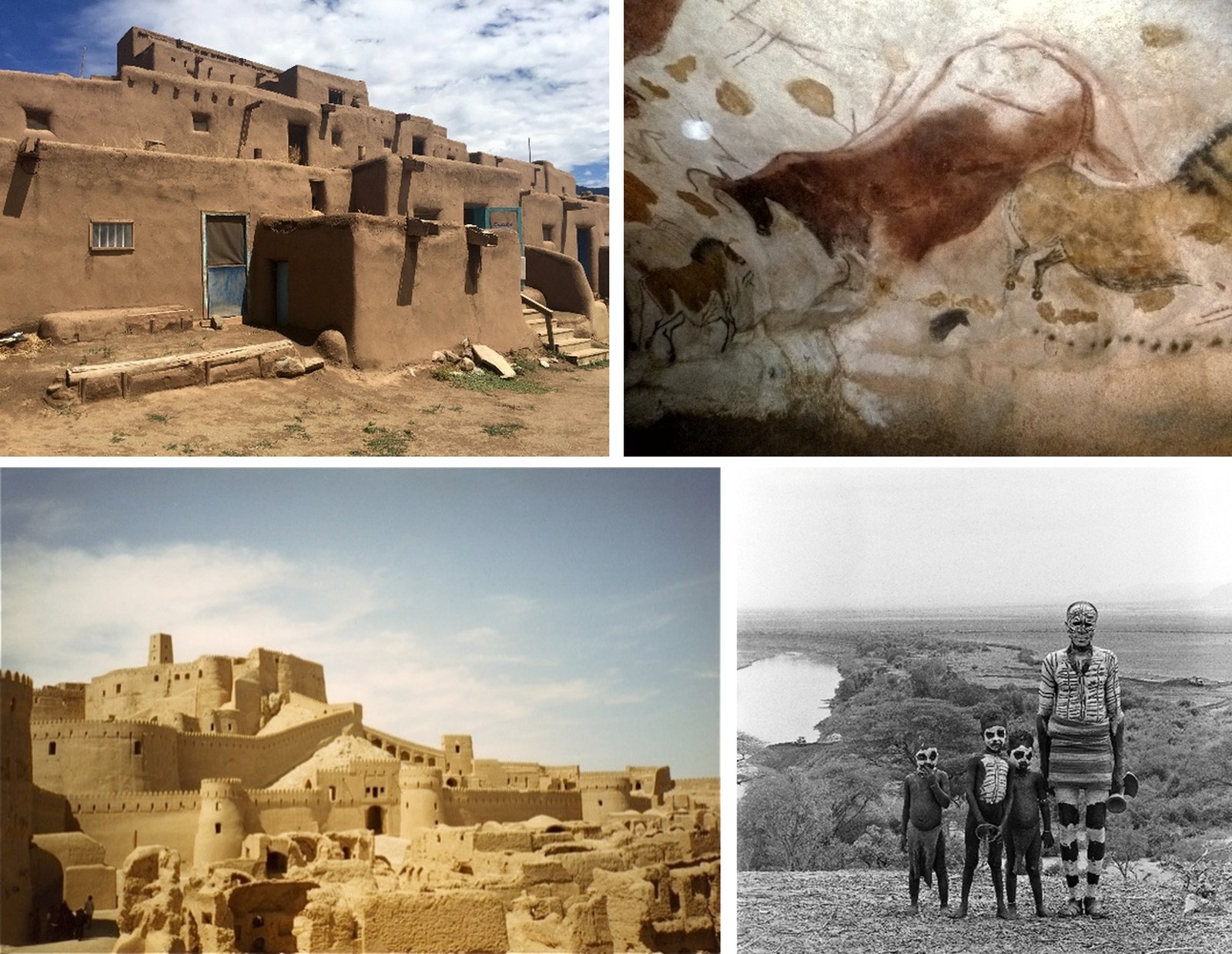
Top left: © Taos Pueblo, Taos, NM, by w_lemay, CC0 1.0, via Flickr, no changes were made to the original photo.
Top right: © Lascaux, prehistoric cave painting 015, by JoJan, CC BY 4.0, via Wikimedia Commons, no changes were made to the original photo.
Bottom left: © Tower and fort of Bam, Iran, by Charlie Phillips, CC BY 2.0, via Flickr, no changes were made to the original photo.
Bottom right: © Karo tribe, Omo Valley, Alfred Weidinger from Vienna, Austria, CC BY 2.0 , via Wikimedia Commons, image cropped on the top.