2.1 — Soil variability and development
Soils around the world
Stran 2 / 4
Soils vary in space and time
If you travel across continents, you will encounter strikingly different soils shaped by climate and geology. If you move across a region, soils may change with vegetation, relief, or land use. And sometimes, soils can differ within just a few meters, for example from the top of a slope to its base. The closer you look, the clearer it becomes: soils are not the same everywhere. They reflect their surroundings and their history.
When people look at soil profiles, they notice different things. Some see the distinct layers first. Others are drawn to the colors and patterns. Some begin to wonder who inhabits the tiny pore spaces between mineral particles. And some may even ask themselves who has walked across this soil surface over the past centuries or millennia.
All of these observations are valid. They are different entry points into the same story. Soil profiles tell an environmental story. If you learn how to read them and take the time to look closely, they reveal how deeply connected the land is to rocks, water bodies, the atmosphere, plants, animals, and to us as humans.
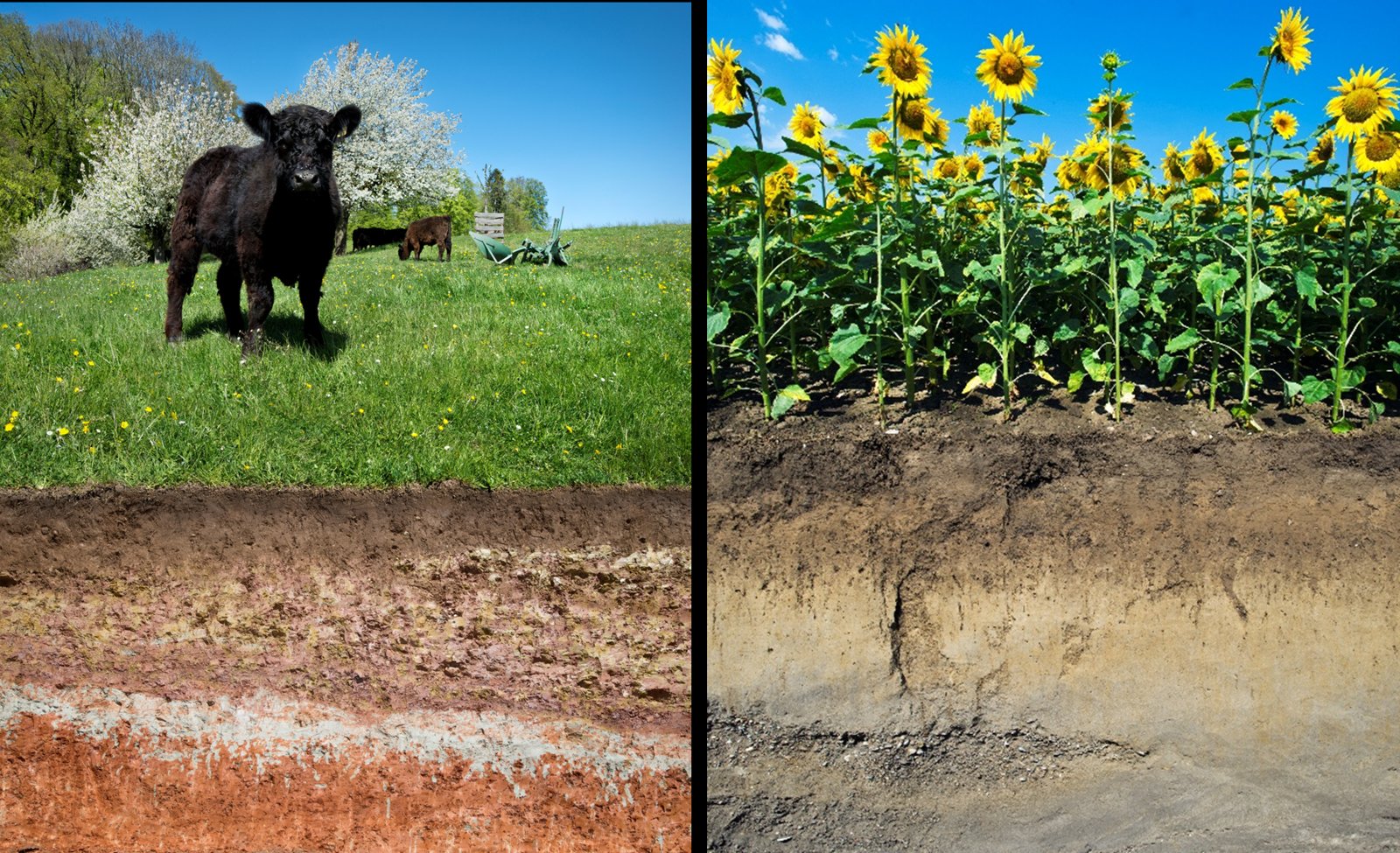
© Soil profiles in Switzerland as part of the calendar “Faszination Boden” by Gabriela Brändle, Urs Zihlmann (Agroscope) and Andreas Chervet (LANAT)