
3.5 — Soil sealing
Consequences and mitigation measures
Page 1 / 6
How soil sealing impacts soil services
Now that you have reflected on the spread of soil sealing and where it occurs, it is time to look at the consequences of soil sealing for the functioning of soil, and concrete measures to mitigate them.
According to Tobias et al. (2018), soil sealing is “a core reason for land degradation in industrialized countries.”
Soil sealing can lead to a complete and irreversible loss of soil functions and ecosystem services they provide (Stolte et al., 2015; Tobias et al., 2018; Scalenghe & Marsan, 2009; O’Riordan et al., 2021). Below you can see examples of some of such effects:
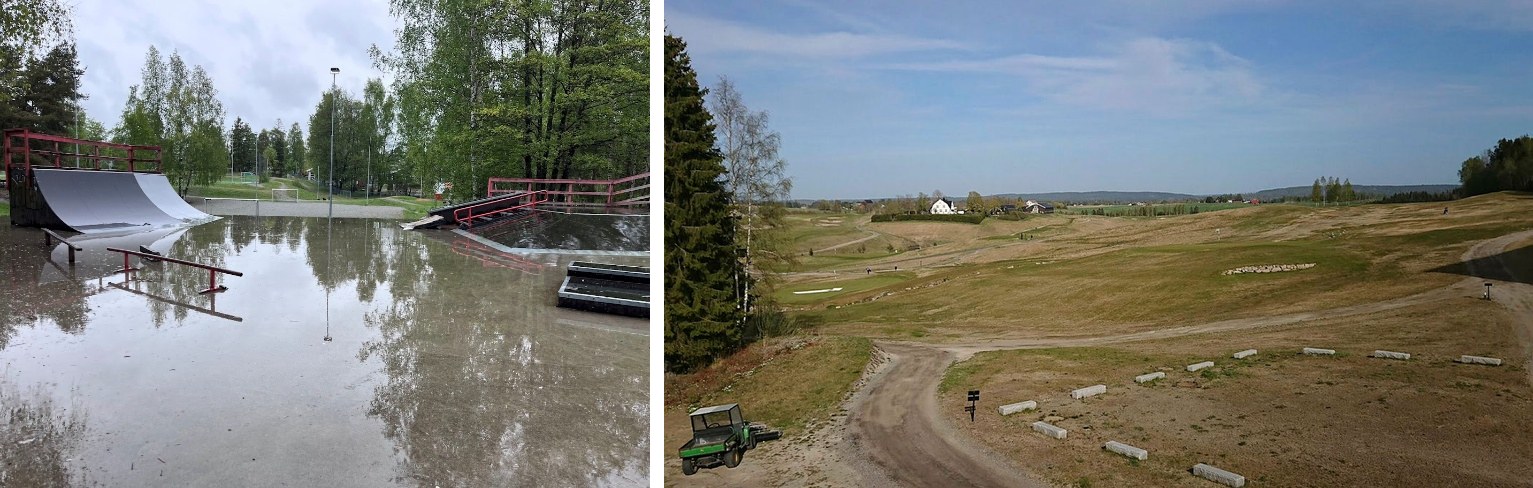
Left: © Flooded skate park in Norway by Hanne Ugstad, NIBIO.
Right: © Golf lane in Norway by Kjetil Fadnes, NIBIO.
Soil sealing reduces water infiltration and increases surface runoff making drainage systems necessary. Soil sealing also reduces the ability to tackle flood events (left picture). Rural land take can leave fewer fertile soils for future generations and decreased food and fiber production. Here showcased by a former agricultural land turned into a golf lane (right picture).
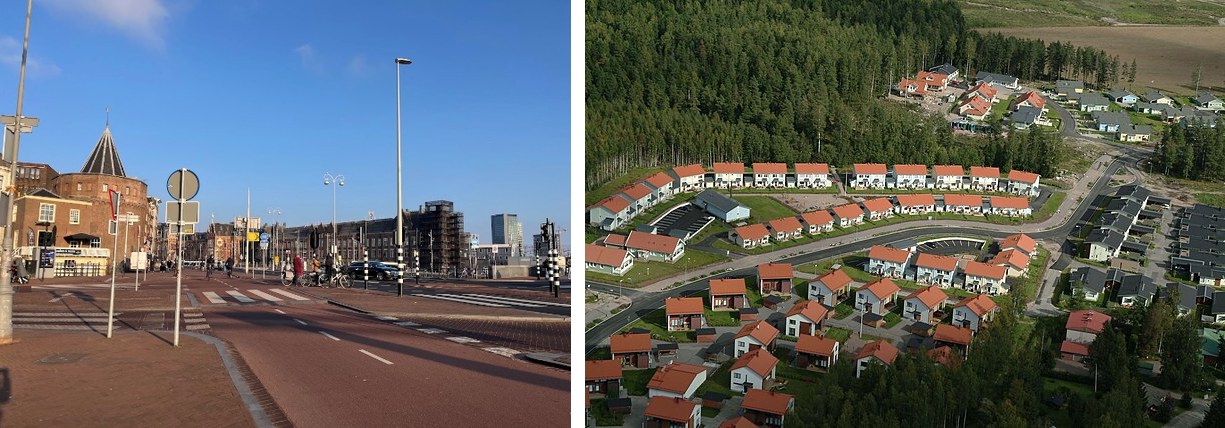
Left: © Sealed surfaces in Amsterdam, Netherlands, by Hanne Ugstad, NIBIO.
Right: © Low residential in Ylästö, Vantaa, Finland by Skyfoto, CC BY 4.0, no changes were made to the original photo.
The temperature of sealed surfaces are usually higher compared to the ones covered by green vegetation and associated changes in microclimate (left picture). Furthermore, the aesthetic value of a landscape can be reduced due to uniformity after soil sealing (right picture).
Although soil sealing has numerous negative consequences, it also can bring certain benefits, such as supporting economic development, enabling the creation of new infrastructures. However, these benefits do not compensate for the often irreversible loss of soil functions and overall land degradation due to soil sealing.