2.2 — Soil components & DIY soil testing
Soil structure: a hidden architecture
Page 1 / 3
Homes, pathways and hidden spaces
So far, we have looked at the individual components of soil. However, soil is more than just a mixture of ingredients. What truly matters is how these components are arranged. Soil structure describes how sand, silt, and clay particles, along with organic matter, water, and air, are organised in space.
These components form aggregates - small clusters of particles – that create a porous structure with many interconnected spaces, known as pores. Aggregates form when soil particles are bound together by a combination of physical, chemical, and biological processes. Clay particles and organic matter can act as natural binding agents, helping smaller particles stick together. Certain metals in the soil, such as calcium, can also help bind particles by forming bridges between mineral surfaces and organic matter.
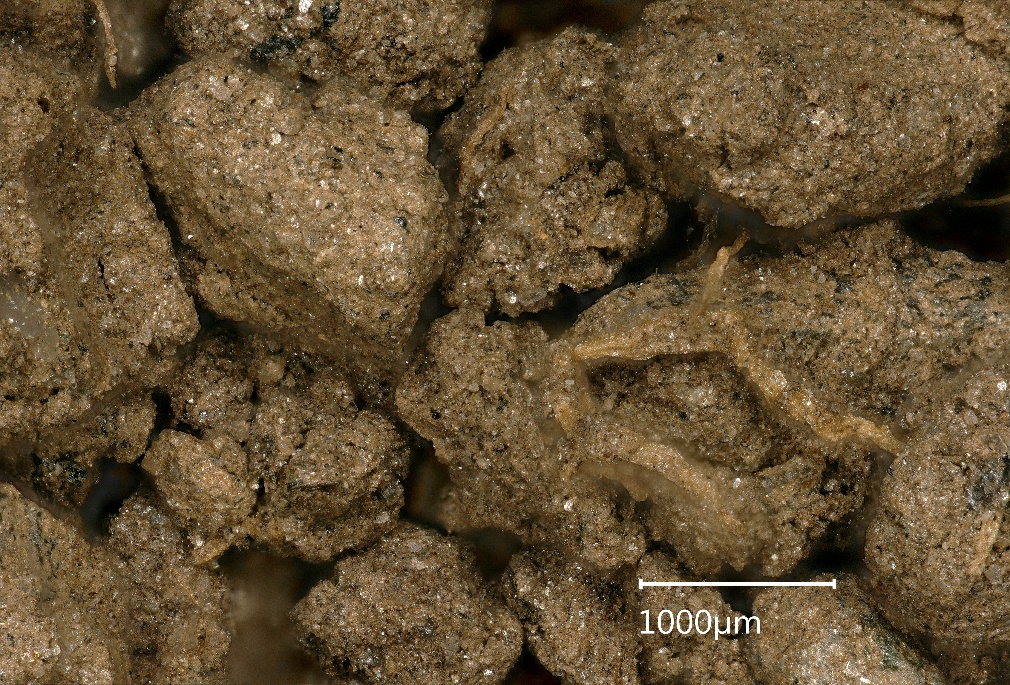
© Soil aggregates by Axel Mentler and Sebastian Wieser, BOKU University
Soil organisms play an important role as well. Plant roots, fungal threads, and microorganisms produce sticky substances that glue particles together. Soil animals such as earthworms further shape aggregates as they mix soil and create channels while moving through it.
Together, these processes create a stable structure made of aggregates and pores. This structure allows water and air to move through the soil and provides habitats for the many organisms living within it. The size and arrangement of these aggregates largely determine how much water, air, and life the soil can support.
Both aggregates and pores serve as homes, highways, and survival spaces for countless soil organisms, and they regulate water and air movement. Larger pores allow water to infiltrate and drain, while smaller pores retain water for plant use. Pores also provide pathways for roots and supply oxygen to soil organisms.
A useful way to visualise soil structure is to compare soil to a city: the solid particles and aggregates are like buildings, while the pores are like streets and open spaces that allow movement and exchange. When these pathways are well connected, water, air, roots, and organisms move efficiently. When streets are blocked, movement slows – the same is true for soil.
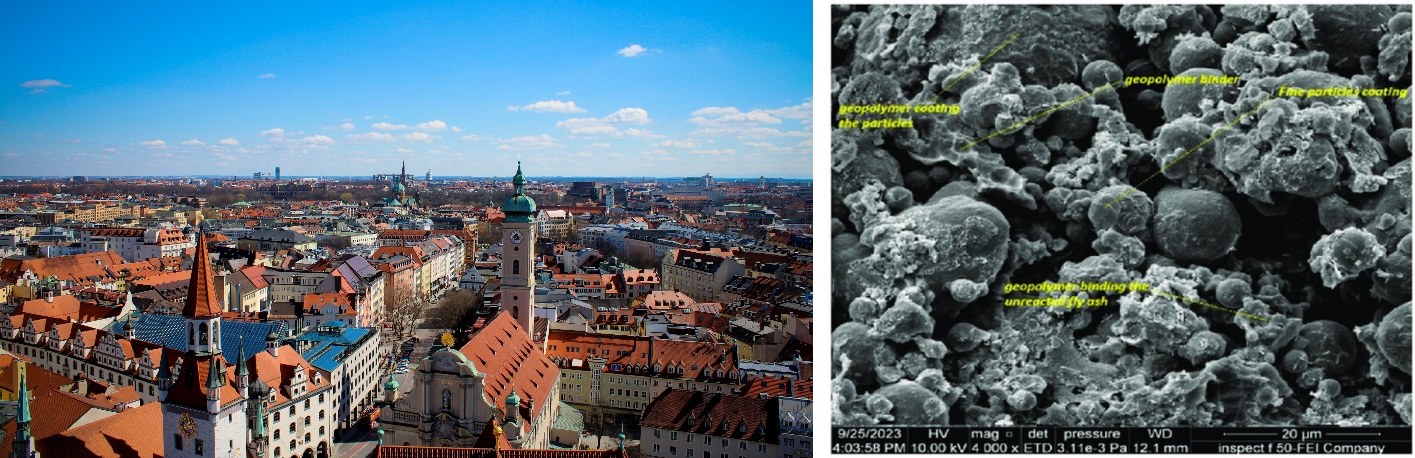
Left: Munich, Germany, skyline by Nicole June. CC BY-NC 2.0, the photo was cut off on the right side.
Right: © Scanning Electron Microscope (SEM) image of a rammed earth mixture in Microstructural Observations on the Durability of Stabilized Rammed Earth by Soura Saeed and Muayad Al-Sharrad (2020). CC BY 4.0, no changes were made to the original figure.
See also Figure 2 in an article by Yudina et al. for a great visualisation of the interior of soil microaggregates. Do you think the sketch helps you imagine what’s happening between the mineral particles – the tiny root channels, clusters of bacteria, and fragments of plant residue all held together like natural glue?