2.1 — Soil variability and development
Soil forming processes
Pagina 2 / 7
Clue 1: A dark surface layer
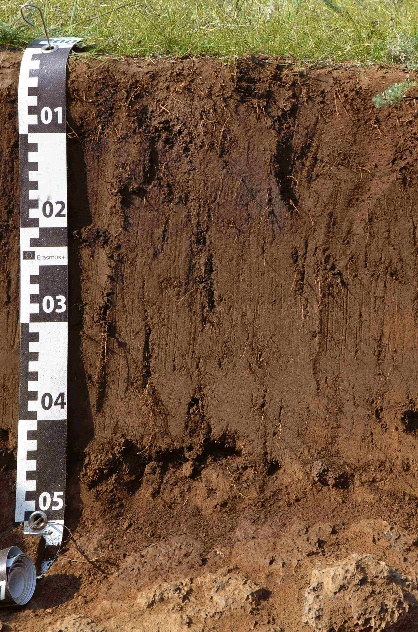
Clue 1: a dark surface layer
When the uppermost layer of a soil is dark brown or almost black, this usually tells us that organic matter has accumulated there. Leaves, roots, and other plant residues decompose and mix with mineral particles.
Over time, this process creates a nutrient-rich topsoil. A thick, dark topsoil often suggests abundant vegetation and relatively stable conditions over time.
Grasslands, for example, are known for developing deep, dark surface layers. So, when you see a dark horizon, ask yourself:
What kind of ecosystem might have contributed to this?