
3.3 — Biodiversity loss
Earthworms — the engineers of the soil
Page 1 / 7
What are earthworms and what makes them unique?
If you have ever taken a walk after a rainstorm or dug in a garden, you have probably come across an earthworm. They are among the most familiar of all soil organisms, often regarded simply as fish bait or a sign of "healthy soil." However, their true importance lies in their physical and biological activities. Earthworms can strongly influence soil structure, nutrient cycling and the conditions for other soil organisms.
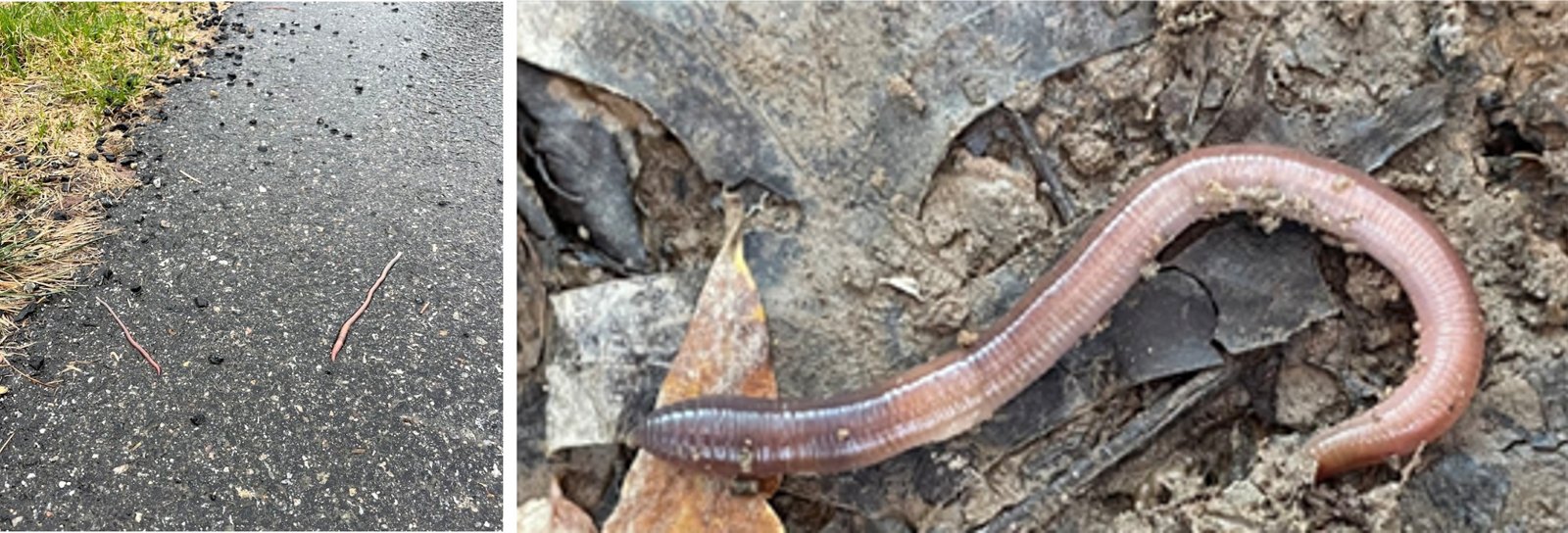
Left: © Earthworm during a rain event by Hanne Ugstad/NIBIO.
Right: © Earthworm by Erling Fløistad/NIBIO.
Earthworms are the heavy-lifters of the soil community – ecosystem engineers who build, restructure, and maintain the world beneath our feet.
Earthworms belong to the soil macrofauna (width > 2 mm) and are classified as annelids, or segmented worms. They are essentially muscular tubes that "eat" their way through the soil, acting as biological ploughs and bioreactors. If we compared the soil ecosystem services earthworms provide with human professions, we would end up with a list similar to this:
- Groundworker: mixes soil layers, also called bioturbation.
- Drainage engineer: creates burrows and larger pores (macropores) that improve soil aeration and water infiltration.
- Waste remover: breaks down and decomposes organic materials.
- Fertiliser factory: produces nutrient-rich (N, P, K) castings (earthworm droppings) by digesting organic materials and microorganisms.