2.3 — Soil biodiversity
Life in the soil food web
Page 4 / 8
Mesofauna: The crumb-scale community (≈ 0.1-2 mm)
The next group of soil organisms is known as the mesofauna. These animals are typically between 0.1 and 2 mm in size and include mites, springtails, and enchytraeids (also called pot worms). Although they are difficult to spot without careful observation, they are among the most abundant animals living in the soil.
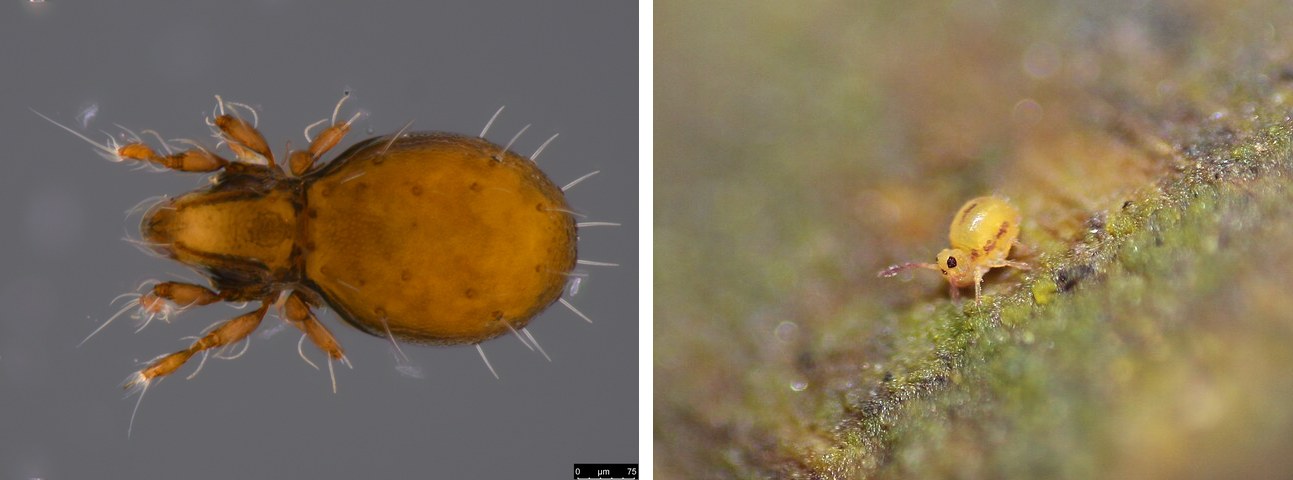
Left: © Oribatid mite by Donald Hobern, CC BY 2.0, no changes were made to the original photo.
Right: © Sminthurides malmgreni springtail on rock by Jaiiiiiiii, CC BY 4.0, no changes were made to the original photo.
Mesofauna inhabit the small pores between soil particles, where they feed on fungi, bacteria, algae, and decaying organic matter. For this reason, they are sometimes referred to as micro-grazers. By feeding on microorganisms, they help regulate microbial communities and stimulate the release of nutrients that plants and other organisms can use.
These tiny animals also contribute to decomposition by breaking organic material into smaller fragments. This increases the surface area available to microorganisms, making decomposition more efficient. In this way, mesofauna link the microbial world with larger soil animals and help transfer energy through the soil food web.
Are you in the mood to watch springtails jump? If so, you can watch this short video “The Springtail” narrated by David Attenborough as part of the BBC’s Life in the Undergrowth documentary series. It lasts approximately 2 minutes.