
3.4 — Peatland degradation
Threats to peatlands
Page 5 / 6
From historical transformation to a modern challenge
The consequences of centuries of subsidence are now embedded in the Dutch landscape. Agricultural land has sunk, roads and other infrastructure are affected, buildings require foundations adapted to soft and subsiding soils (think about the ‘Dancing Houses’ in Amsterdam), and increasingly intensive water management is needed to keep low-lying areas usable.
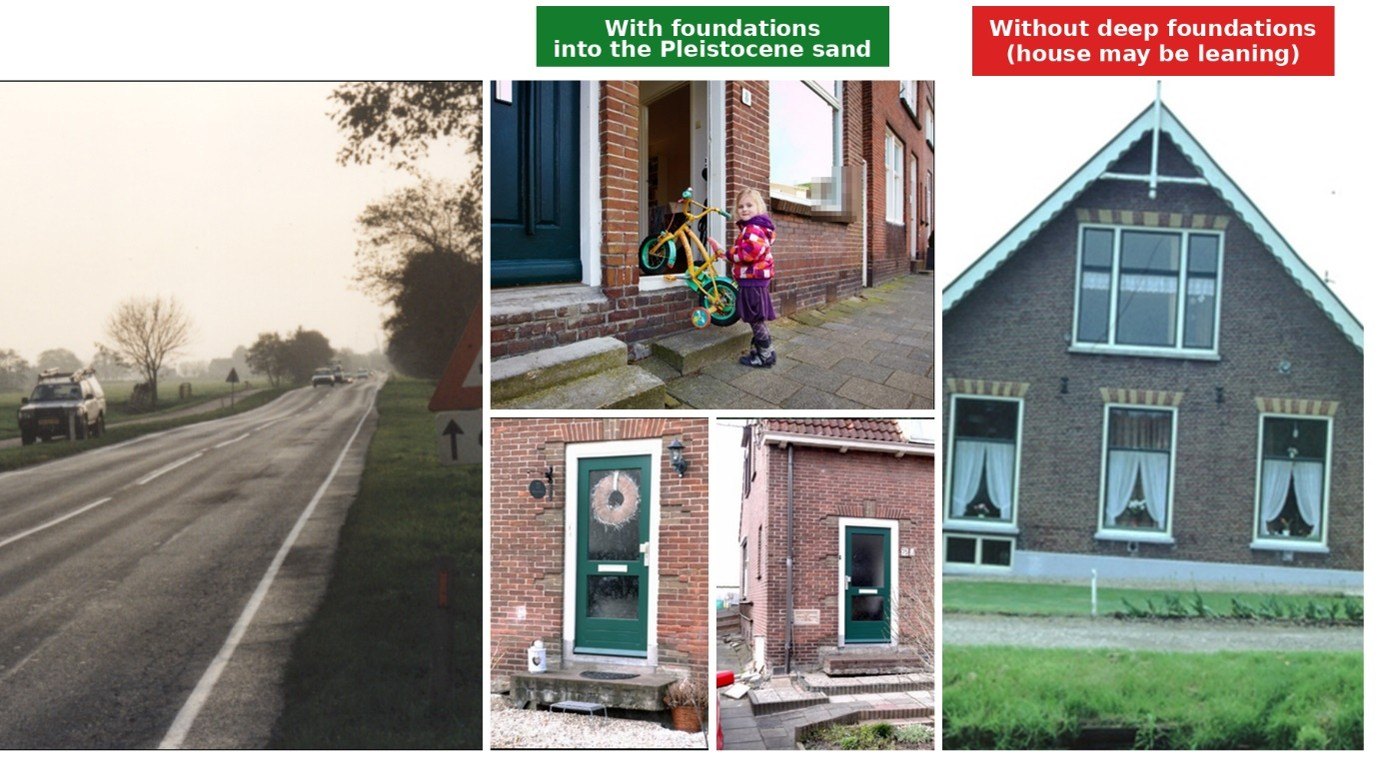
© Current consequences of peat subsidence. Left: Roads in peat areas can become uneven as the underlying peat subsides, requiring frequent maintenance (photo: G. Peek). Right: Houses with foundations extending into the underlying Pleistocene sand remain at their original level while the surrounding peat surface subsides, so increasingly high steps may be needed to reach the entrance. Houses without such deep foundations may subside unevenly, causing them to lean and their walls to crack, resulting in repeated repairs. Photos from the archive of the Soil Geography and Landscape group, WUR.
The Dutch transformed a wet peatland into a landscape in which millions of people now live and work. But maintaining that landscape through drainage causes the peat beneath it to continue to disappear. How long can we continue in this way?