
1.6 Soils in a connected world
Soils in your profession or study program
Página 3 / 4
Seeing soil through different lenses
Different disciplines and professions tend to “see” soil in different ways, depending on their goals, methods, and responsibilities. For agronomists, soil is often a productive medium; for engineers, a physical foundation; for ecologists, a living ecosystem; and for archaeologists, an archive of human and environmental history. Economists may approach soil as a form of natural capital, while public health perspectives focus on its role in environmental exposure and wellbeing.
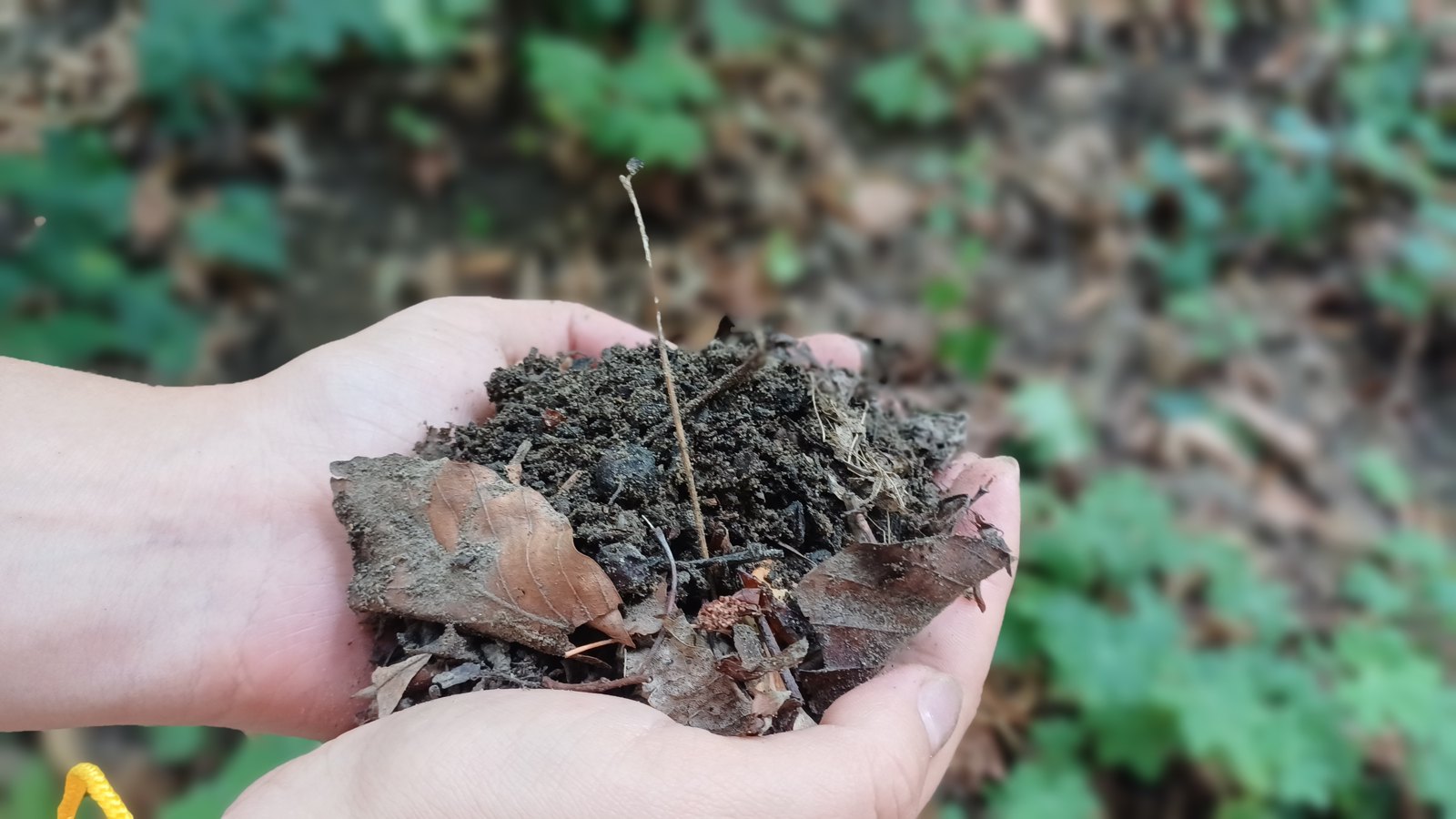
© Hands holding soil by Sabine Huber, BOKU University
Beyond these scientific and technical perspectives, soils also appear in education, the arts, and community practice. In education, soil becomes a way to teach systems thinking and environmental awareness. In the arts, it serves as a material and source of inspiration for expressing relationships between humans and nature. In community work, soil is often connected to local identity, food systems, green spaces, and collective action.
Taken together, these perspectives show that soil is not defined by a single function or discipline. Instead, it is a shared point of reference across many fields, each highlighting different aspects of the same underlying system.