
3.3 — Biodiversity loss
Soil protists — the invisible engines of ecosystems
Page 3 / 7
Soil ecosystem services performed by protists
Protists are a key engine of soil ecosystems. Even though they are invisible to the naked eye, they regulate nutrient cycles, shape microbial communities, influence plant performance, animal and human health, and contribute to soil fertility (see, e.g. Berlinches de Gera et al., 2025; Geisen et al., 2018; Micciulla et al., 2024) for more information. So, if protists had human jobs, a list of professions could look like this:
- Nutrient cycling booster: increase nutrient cycling through predation on, for example soil bacteria and fungi.
- Waste remover: help decompose dead organic material.
- Doctor: help plants remain healthy by competing with or preying on soil pathogens.
- Taxi driver: transport microorganisms such as beneficial bacteria to new locations close to plant roots, thereby improving plant health.
- Security agent: control the population of dangerous soil organisms.
- Landscape architect: some protists parasitise plants and animals and thus change the composition of these populations.
- Insurance company agent: contribute to carbon fixation and oxygen production, thus helping to a certain degree to mitigate climate change. Some protist groups are pathogens, meaning that they infect other plants, animals and even humans, making them ill or causing them to die.
Did you know? Despite the many beneficial services that protists provide to humans and ecosystems, some species can also have harmful effects from a human perspective. Potato and tomato late blight, responsible for the crop failure of these important foods, is caused by a protist – an oomycete called Phytophthora infestans.
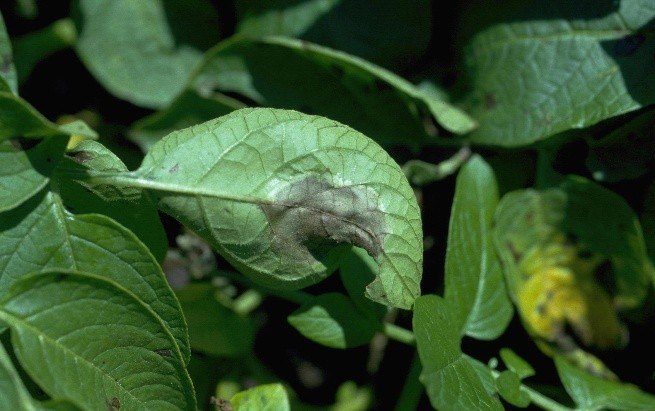
© Late blight on potato leaf by Howard F. Schwartz, Colorado State University, United States, CC BY 3.0 United States, no changes were made to the original photo.