2.4 — Soil diversity across land covers
Peat cover stories
Page 1 / 5
Focus on peat(lands)
In the previous lesson, you examined how soil characteristics and ecosystem services vary across different land covers. Now, we turn to a particularly distinctive type of soil and landscape – peat. In the next two lessons, you will explore what peat is, how it forms, and the soil ecosystem services peatlands provide, with a special focus on peat landscapes in the Netherlands.
What is peat, how does it form, and where can you find peatlands? Imagine you are standing in a peat landscape. Have you ever realised that beneath your feet the layers of peat reveal how the peat landscape has developed over time?
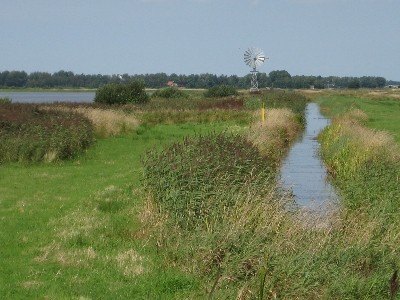
© Earnewald peatlands (Friesland Netherlands) by Paul Arps, CC BY 2.0, no changes were made to the original photo.
What is peat? Peat is a distinctive product of waterlogged soils. It consists of partially decomposed plant remains and organic matter that accumulate over long periods of time. Because these soils remain saturated with water, oxygen levels are low and plant debris does not fully decompose. Peat is defined as material that has accumulated in place and contains at least 30% dead organic matter on a dry-mass basis.
What are peatlands? Peatlands are wetland ecosystems in which the production of organic matter exceeds its decomposition, resulting in the formation of peat layers. They include both actively peat-forming landscapes, called mires, and areas where peat is no longer accumulating because key peat-forming plants, such as Sphagnum mosses, are absent. Peatlands store about one-third of the world’s soil carbon and contain around 10% of global freshwater resources.
Peatlands are generally divided into two main types: fens and bogs. Fens typically occur in low-lying areas and are fed by groundwater and surface water that has passed through mineral soils. As a result, they are relatively nutrient-rich and have a higher pH. Bogs, by contrast, receive water only from rainfall, making them more acidic and nutrient-poor.
Although peatlands cover only 3-4% of the Earth’s land surface, they store nearly 30% of the global carbon stock. This enormous carbon reservoir is increasingly threatened by widespread peatland degradation. To reduce greenhouse gas emissions and protect these carbon-rich ecosystems, countries are developing conservation and restoration policies. However, progress has been limited by insufficient information on the extent and condition of peatlands.