4.4 — Seeds of change: your soil story in action
From soil knowledge to soil care
Page 3 / 5
Soil care beyond usefulness
Imagine a narrow grass strip on a university campus. Many people cross it every day because it is the shortest route between two buildings. Over time, the vegetation becomes sparse, the surface becomes more compacted, and water may collect after rain. With a soil perspective, this is not only a maintenance issue. It becomes a sign of how people, design, movement, vegetation, and soil condition are connected.
The same shift can happen in other contexts. A gardener may see compost not only as reused waste, but as a way of feeding living soil. A design student may look at a public square and ask where rainwater can enter the ground. A law student may recognise that land-use decisions affect a shared environmental resource. A journalist may notice that stories about drought, flooding, food prices, or urban heat often have a soil dimension. A student of arts may use colour, sound, material, or memory to help others encounter soil differently.
Soil care begins when soil is no longer treated as background. It asks where soil is present, how it is being used or left out of view, and what kind of response would fit that context. This response does not need to be large. It may begin with a question, a conversation, a small resource, support for an existing initiative, or a way of making soil easier to notice.
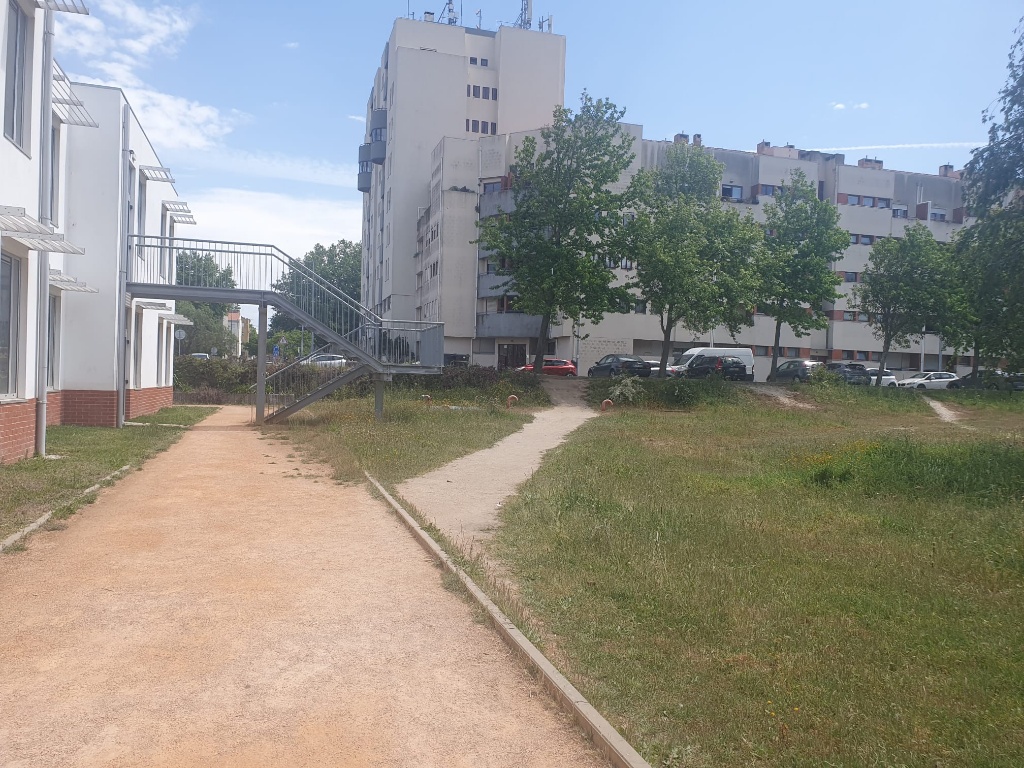
© Paved road and desire path in University of Aveiro Campus, Aveiro, Portugal, by Ana Machado, University of Aveiro.