
4.1 — Soil protection & policy
Where do you fit in soil governance?
Seite 1 / 6
Where do you fit in soil governance?
Soil governance is often expressed through laws, institutions, and policy frameworks. However, governance does not only take place in ministries, parliaments, or international meetings. It also depends on how knowledge is produced, how land-use decisions are prepared, how local plans are discussed, how soil data are used, and how responsibilities are shared between different actors.
People can therefore connect with soil governance in many ways. Some roles are formal and professional. Others are linked to study, research, communication, public participation, or everyday contact with land-use decisions.
A soil scientist may contribute by monitoring soil condition, interpreting soil indicators, or explaining degradation risks. A planner may influence whether land is sealed, restored, protected, or kept available for green infrastructure. A farmer, forester, or land manager may apply practices that protect soil organic matter, reduce erosion, or improve infiltration. A formal or informal educator may help others understand why soil matters. A resident may take part in a public consultation on a new road, housing project, park, or restoration plan.
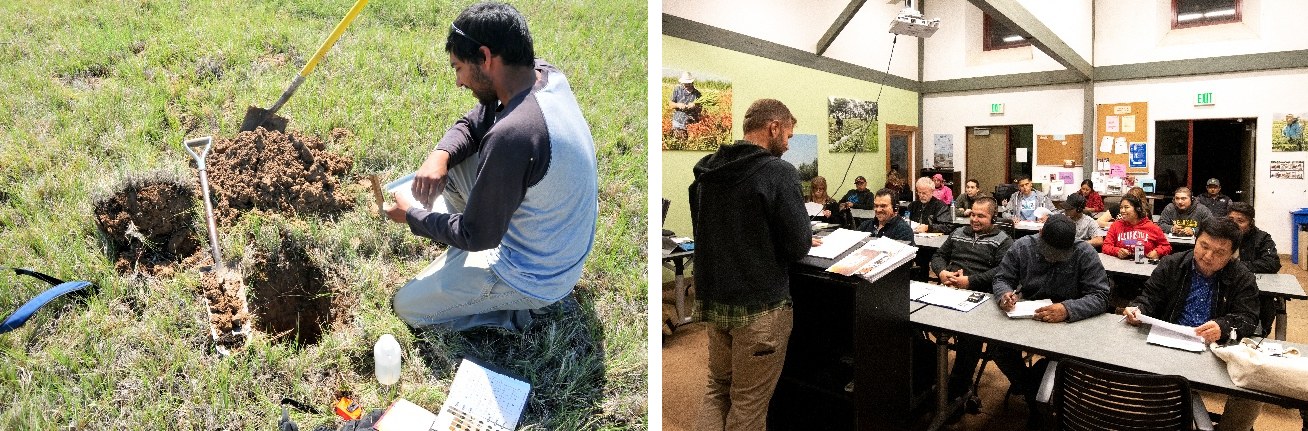
Left: © Soil scientist conducting soil characterisation, by Prof. Dr. Alessandro Samuel-Rosa, CC0 1.0, via Wikimedia Commons, no changes were made to the original photo.
Right: © Soil conservation training for farmers, by USDAgov, CC0 1.0, via Flickr, no changes were made to the original photo.
These roles do not carry the same level of power or responsibility. A public authority has different legal responsibilities from a citizen. A landowner has different rights from a student. A researcher has different influence from a municipality. For this reason, soil governance requires attention not only to who is involved, but also to the kind of authority, knowledge, responsibility, or voice each actor brings.