
3.1 — Soil organic matter decline
When the carbon balance changes
Seite 2 / 5
Forests
Disturbances can quickly shift this balance. In forest ecosystems, storms, droughts, fires, or pest outbreaks such as bark beetles can suddenly reduce vegetation cover and change organic inputs. Human activities can have similar effects. Timber harvesting, for example, removes biomass and may disturb the forest floor. When trees are removed, soils become more exposed to sunlight, rainfall, and temperature fluctuations. These changes often create warmer and wetter soil conditions that stimulate microbial activity and accelerate the breakdown of organic matter.
One example of such disturbance is windthrow, where strong storms uproot trees or break parts of the forest canopies. When this happens, the forest canopy opens and the organic layer on the forest floor may be disturbed or eroded. In forests where organic material has accumulated slowly over time, such disturbances may temporarily increase decomposition and lead to losses of soil organic matter. Soil organic carbon (SOC) stocks in forests are often higher than in pasture or arable soils, which means that disturbances can have a relatively large impact on carbon losses. However, these effects are not uniform. They vary depending on the type and severity of the disturbance, as well as on how the site is managed afterwards and how quickly vegetation and soil processes recover.
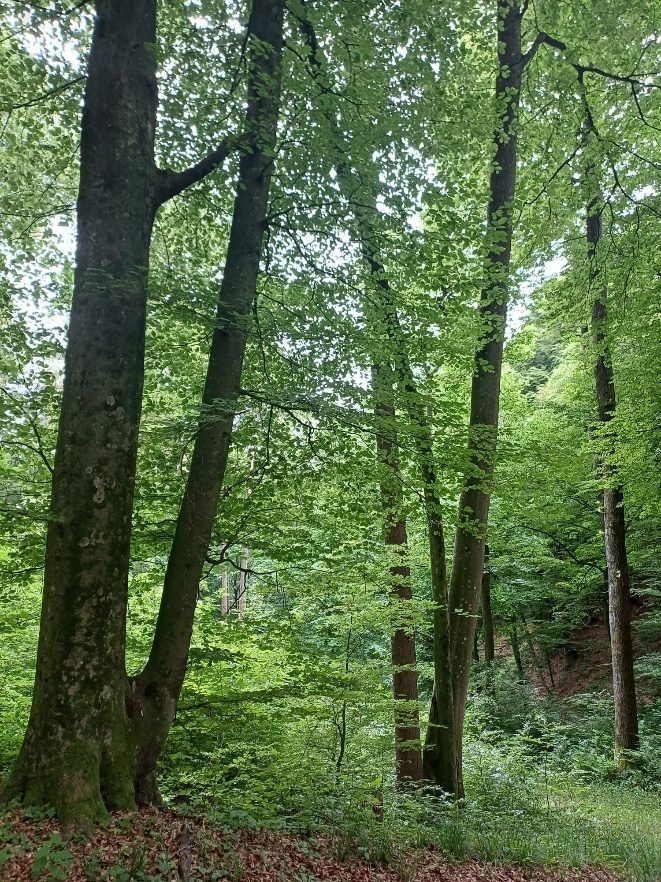
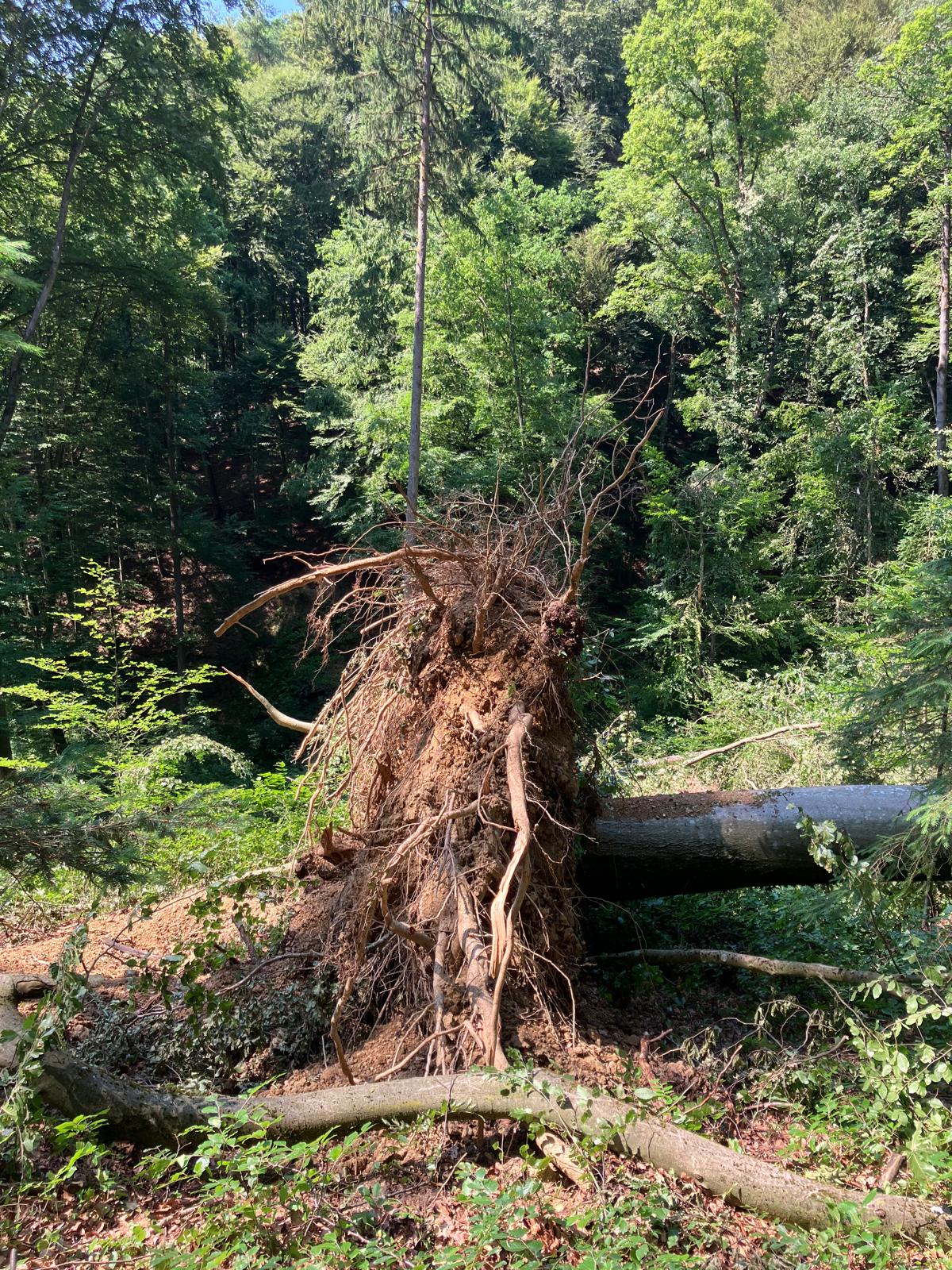
© Forest before and after windthrow by Sabine Huber, BOKU University
Optional: Explore more on how disturbances shape SOM dynamics in forests and how the effects can be alleviated in articles by Mayer et al. (2023) and Pietrzykowski et al (2025), respectively!