
1.3 — Regulation
Soil regulates the water cycle: A natural sponge and filter
Seite 1 / 6
Where does rain go after it hits the ground?
Imagine a summer rainstorm passing over a landscape.
As the rain falls across the land, it encounters a variety of surfaces: a meadow covered with vegetation, a garden, a forest, an agricultural field, and a large, paved parking area. Even though each location receives water from the same storm, what happens to that water can differ greatly depending on the surface, the soil properties and condition of the soil beneath it.
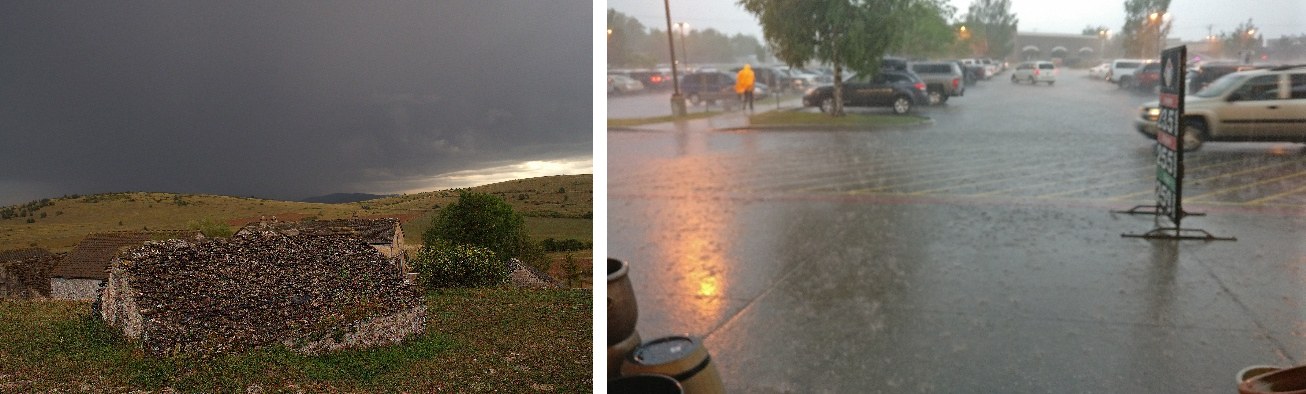
Left: © Rural area – Petit refuge de Causses by Lynette FIESCHI, CC BY 2.0, no changes were made to the original photo.
Right: © Urban area – Rain/Hail Storm by LunchboxLarry, CC BY 2.0, no changes were made to the original photo.
In some places, much of the rainwater soaks into the soil and is stored for later use by plants or released slowly into groundwater. In other places, water quickly flows across the surface, collecting in drains, streams, or low-lying areas.
The way water moves through these places is strongly influenced by soil. Soil characteristics, vegetation, and land management determine how much water can infiltrate, how much can be stored, and how water is filtered as it moves through the landscape.
In this lesson, you will follow the journey of rainwater through the soil and explore how soil regulates the movement of water.