
1.5 — Culture
Soils in recreation and spiritual connection
Page 2 / 6
Soils, place and cultural meaning
However, wellbeing is not only related to physical activity. It can also arise from simply observing and experiencing landscapes – pausing during a walk or looking at a view from a window.
Perceptions of landscapes are also shaped by aesthetic values, which vary between individuals and cultural contexts. What is considered “beautiful” is not universal and can sometimes become a matter of discussion or even disagreement. A simple example is the different appreciation of managed lawns compared to more natural meadow-like vegetation.
Soils contribute to cultural identity not only through the landscapes they support, but also through the meanings, memories and practices that people associate with particular places. Over time, specific soil types can shape traditions, local architecture, cultural expressions and a shared sense of belonging. In this way, soils become part of how communities understand and relate to their environment, contributing to what is often referred to as the emotional, cultural and symbolic connection that people stablish with one specific place.
These perceptions extend into everyday culture. In some regions, features such as molehills are seen as signs of ecological activity, while in others they may be regarded as a disturbance in managed landscapes. Cultural interpretation can even enter food traditions – for example, “molehill cake” in parts of Northern Germany, where landscape features are transformed into culinary metaphors.
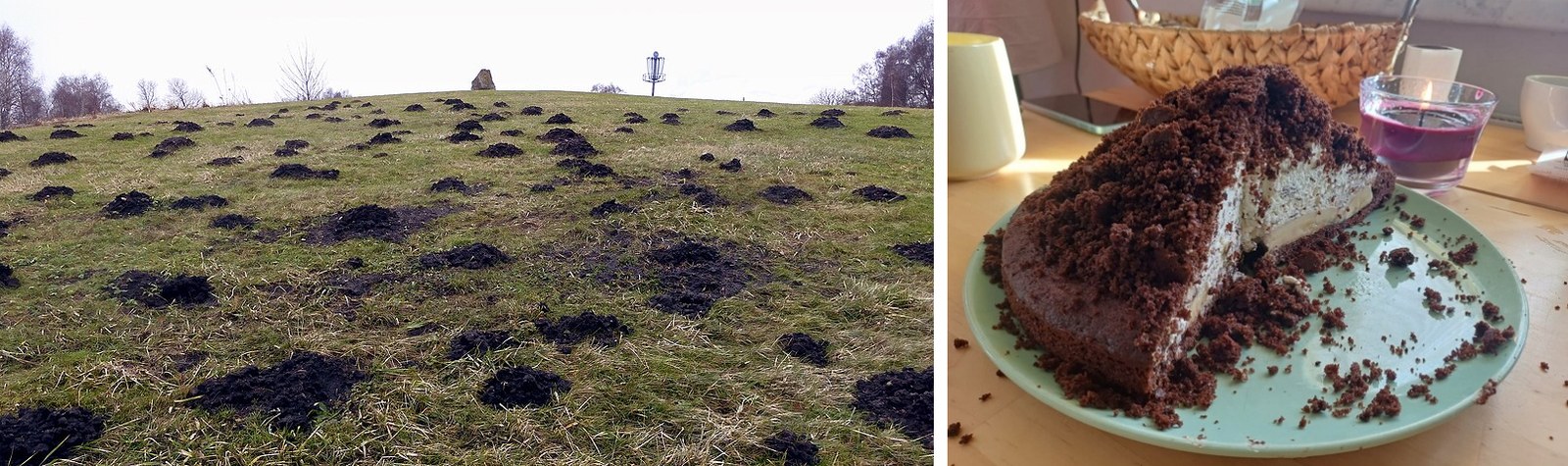
Left: © Mullvadsskott – jordhögar efter Mullvad/Mole hills on lawn, by Jonn Leffmann, CC BY 3.0, the original photo was cut on the right side.
Right: © Mole hill cake, by Sabine Huber, BOKU University.