4.1 — Soil protection & policy
Where do you fit in soil governance?
Page 2 / 6
Different entry points into soil governance
You do not need to work in government to be involved in soil governance. The key question is not only “Who makes the final decision?”, but also “Whose knowledge, choices, and responsibilities shape that decision?”
There are several ways to contribute to soil governance:
- Research and evidence: Producing or interpreting soil data, monitoring soil health, identifying degradation risks, or evaluating restoration measures.
- Land management: Making decisions about farming, forestry, gardening, construction, drainage, restoration, or vegetation cover.
- Planning and design: Influencing how land is used in cities, infrastructure projects, protected areas, green spaces, or river basins.
- Education and communication: Making soil visible through teaching, public engagement, science communication, interpretation materials, or training.
- Public participation: Responding to consultations, joining local discussions, asking questions about land-use plans, or supporting transparent decision-making.
- Policy and administration: Developing, implementing, monitoring, or enforcing rules and programmes related to soil, land, water, biodiversity, agriculture, climate, or contamination.
Soil governance becomes stronger when these entry points are connected. Scientific evidence needs institutions that can use it. Policies need people and resources to implement them. Local decisions need soil knowledge before damage occurs. Public participation needs accessible information. Land managers need practical support, not only obligations.
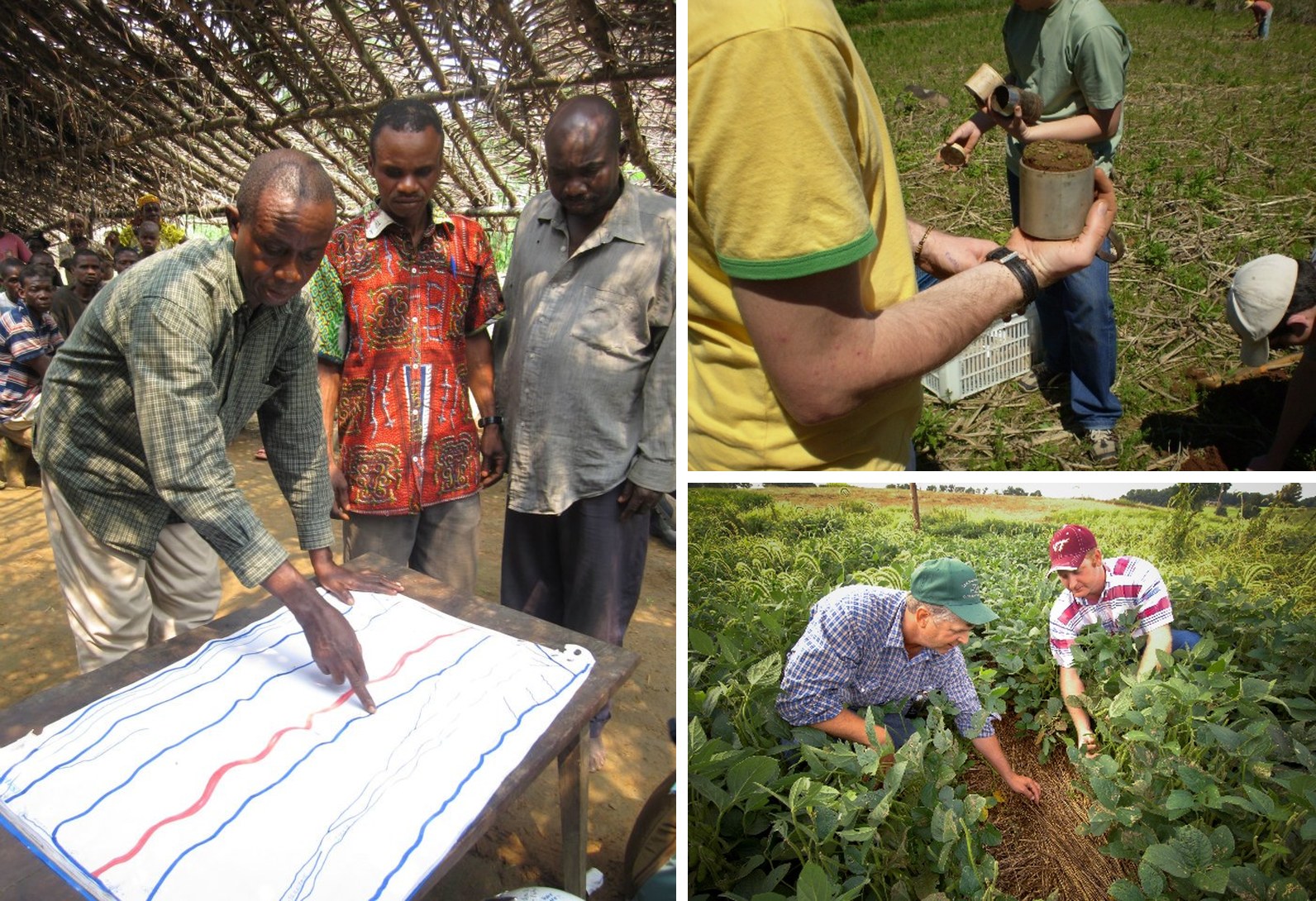
Left: © Participatory land use planning, by USAID in Africa, CC0 1.0, via Wikimedia Commons, no changes were made to the original photo.
Right top: © Soil scientists taking soil samples, by Prof. Dr. Alessandro Samuel-Rosa, CC0 1.0, via Wikimedia Commons, no changes were made to the original photo.
Right Bottom: © Farmers using mulch for soil protection, by Bob Nichols, CC BY 2.0, via Wikimedia Commons, no changes were made to the original photo.
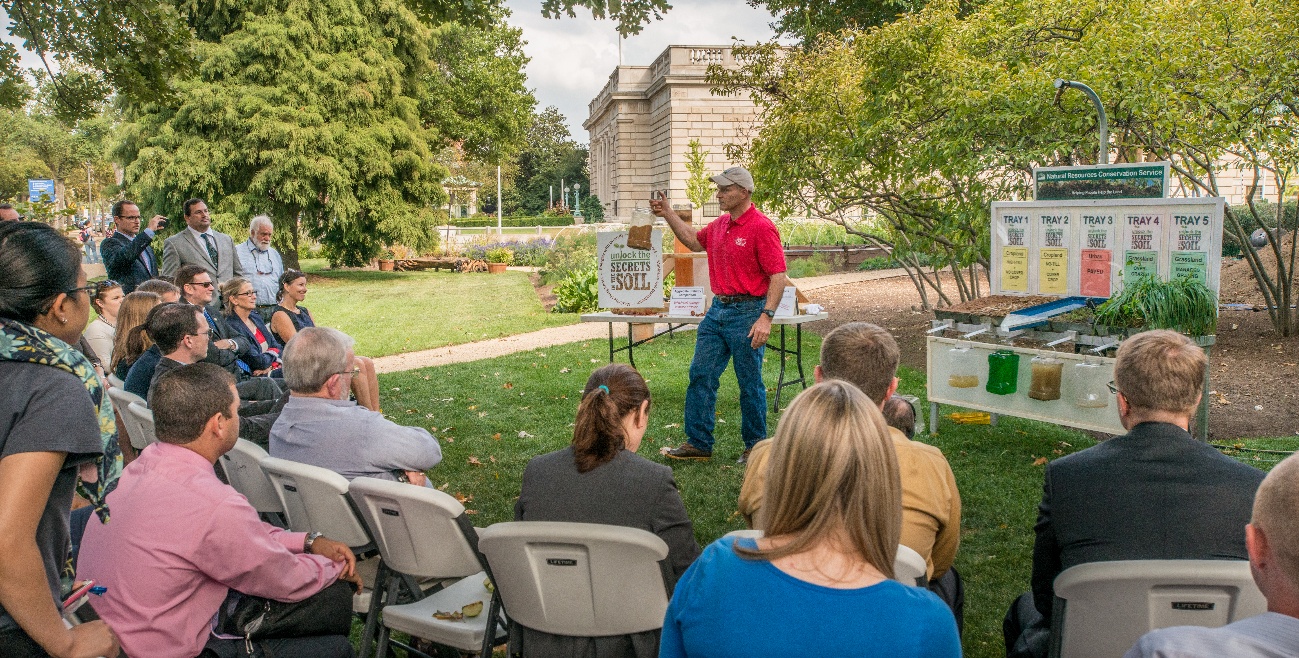
© U.S.D.A. soil educational initiative by Lance Cheung/Multimedia PhotoJournalist, CC0 1.0, via Wikimedia Commons, no changes were made to the original photo.